Sidebar Menu

Select your language

  • Español (España)
  • Русский
  • English (United Kingdom)
Edharmalib Tibetan Digital Library
  • Home

    User

    Joomla! Pages

    Template Layouts

    Content layouts

    Article Layouts

  • Library
    • Article
    • Divination
  • Book
  • Dictionaries
  • Astrology
    • Calendars
      • Gyalpo and Phugpa Calendar
      • Tsurphu Calendar
      • Zurkhai (new Ganden) calendar
    • Horoscopes
    • Astroforecasts
  • Donate
  • About us
    • About
    • Dondrub Dorje Tulku
    • Eduard Oorzhak
    • Privacy
  • Links

351. Explanation of the symbols of Vajrayogini's vision, meditation and behavior

Library - Tengyur - Comments on tantras
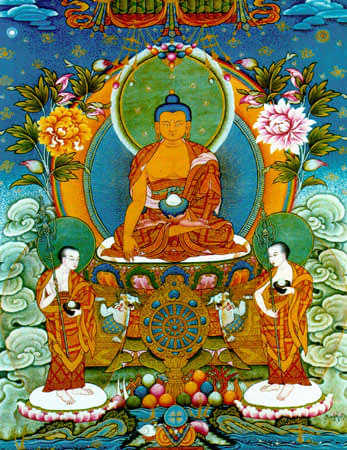
Explanation of the symbols of Vajrayogini's vision, meditation and behavior

     I will explain the symbols of the vision, meditation and behavior of the glorious Vajradakini. Lotus, lion and elephant are symbols of behavior. Deer, crystal and sun are symbols of meditation. Water, fire and jewel are symbols of contemplation.
     Vajradakini shows the three aspects of equal taste. Pishacha, madman and jackal - [show] equal taste of the body. The living dead, Mount Sara, and the little son of earth - equal flavor of ascesis. Space, clouds, and lightning - [show] equal taste of samadhi.
     Vajradakini [appears] as the symbol of methods, wisdom, and their unity. The queen, the rock, and the best horse - [appear] as a symbol of wisdom. The nakedness, the continent and the great road [are] the symbol of the unity of methods and wisdom and the symbol of body, speech and mind. When the fruit comes to its final completion, one's own nature resides in the space of the supreme reality, dharmata. [Everything] arises as pure vision. One comes to clear light. The three bodies are spontaneously attained. Essence appears as unadorned. And since there is no birth, there is no seeking.
     Thus concludes the vajra lines.
     Translated by Karma Paljor (O.E. Filippov).

© edharmalib.com

webmaster@edharmalib.com

You are on a resource dedicated to traditional Buddhism. If Buddhist philosophy and religion contradict the belief, you can leave this resource.
Copying and distribution of site materials is possible only with the permission of the site administration. In all other cases - there is a violation of copyright and related rights, which may entail consequences. Respect the work of others. When copying, posting on their sites, social networks - be sure to indicate the source and translator

We use cookies

We use cookies on our website. Some of them are essential for the operation of the site, while others help us to improve this site and the user experience (tracking cookies). You can decide for yourself whether you want to allow cookies or not. Please note that if you reject them, you may not be able to use all the functionalities of the site.

Ok Decline